GST Registration Process for New Businesses in India
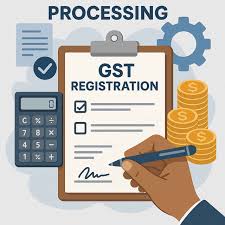
GST registration for new businesses.
Yagnesh Parekh & Co.
3/11/20262 min read
GST for New Businesses in India: A Complete Beginner’s Guide
Starting a new business in India comes with many responsibilities, and one of the most important is understanding the Goods and Services Tax (GST). Introduced on 1 July 2017 through the historic Goods and Services Tax rollout in India, GST replaced multiple indirect taxes and created a unified taxation system across the country.
If you are launching a startup, trading business, service firm, or e-commerce venture, understanding GST compliance is crucial to avoid penalties and operate smoothly.
What is GST?
GST is a destination-based indirect tax applied on the supply of goods and services in India. It replaced several earlier taxes such as VAT, Service Tax, Excise Duty, and others.
GST is administered by the Goods and Services Tax Council and implemented through the Goods and Services Tax Network portal, which handles registration, return filing, and tax payments.
Who Needs GST Registration?
A new business must register for GST if it meets any of the following conditions:
1. Turnover Threshold
GST registration becomes mandatory if annual turnover exceeds:
₹40 lakh – Businesses dealing in goods
₹20 lakh – Service providers
(Thresholds may be lower in certain states.)
2. Interstate Supply
If your business sells goods or services across state borders, GST registration is required regardless of turnover.
3. E-commerce Sellers
If you sell through platforms like Amazon or Flipkart, GST registration is mandatory.
4. Input Tax Credit Benefits
Even if not mandatory, businesses often register voluntarily to claim Input Tax Credit (ITC).
Types of GST in India
GST is divided into four components:
CGST – Central GST (collected by the Central Government)
SGST – State GST (collected by State Governments)
IGST – Integrated GST (for interstate transactions)
UTGST – Union Territory GST
Example:
If a business in Maharashtra sells within the state, CGST + SGST apply.
If it sells to another state, IGST applies.
Benefits of GST for New Businesses
1. Simplified Tax Structure
GST replaced multiple indirect taxes with a single unified system.
2. Input Tax Credit
Businesses can claim credit for GST paid on purchases, reducing the overall tax burden.
3. Easier Compliance
Registration, return filing, and payments are done online through the Goods and Services Tax Network portal.
4. Wider Market Access
GST eliminates tax barriers between states, making interstate trade easier.
GST Returns for New Businesses
After registration, businesses must file periodic GST returns. Some common ones include:
GSTR-1 – Details of outward supplies
GSTR-3B – Monthly summary return and tax payment
GSTR-9 – Annual return
Regular filing is essential to avoid penalties and maintain compliance.
Composition Scheme for Small Businesses
Small businesses can opt for the Composition Scheme if their turnover is below ₹1.5 crore.
Benefits include:
Lower tax rates
Simplified returns
Reduced compliance burden
However, businesses under this scheme cannot claim Input Tax Credit and have restrictions on interstate supply.
Common GST Mistakes New Businesses Should Avoid
Delaying GST registration
Incorrect HSN/SAC classification
Missing return deadlines
Not reconciling Input Tax Credit
Improper invoice formats
Professional guidance can help avoid these errors.
Final Thoughts
GST compliance is a key part of running a business in India. While the system has simplified taxation, it still requires careful handling of registration, invoicing, and return filing.
If you are starting a new business, consulting a tax professional can help ensure smooth GST compliance and allow you to focus on growing your business.
✔ Need help with GST registration or return filing?
Contact our team today for expert assistance and hassle-free compliance.
Yagnesh Parekh & Co.
Email- info@cayagneshparekh.com
Call- +91 7303619911
Get in touch with us and let’s create solutions that work for you!
Chartered Accountants
© 2026 Yagnesh Parekh & Co. | All Rights Reserved